레이블이 culture인 게시물을 표시합니다. 모든 게시물 표시
Cartier's Contemporary Art Foundation's collection – Highlight - 2017 in Seoul Museum of Art next to Deoksugung Palace, Korea
  

Cartier's Contemporary Art Foundation's collection – Highlight - 2017 in Seoul Museum of Art next to Deoksugung Palace, Korea

The way to the Seoul Museum of Art to walk along the stone wall of the Palace, as for me, is always throb with a feeling of being quite different from going to another museum.
The stonewall path of old Deoksugung Palace (덕수궁), one of the Five Grand palaces, located next to the city hall and familiar with Korean, on the way to the museum gives a different feeling throughout the four seasons all year round and is beautiful in itself. The shade of trees made by the fresh green seasons, the feeling that when it rains and go this pathway under umbrella, even the raindrops in this place seem to be something different with other places, the stunning colored leaves in the fall, the tiles of the palace covered the white snow in the winter, all of this dazzle the way to the museum. I read an article about the opening of the Cartier collection in the newspaper and visit the museum in the Sunday afternoon.


On the way to the museum, as usual, people was making their beautiful memories while taking pictures in front of stone wall as the background. It made me feel better to see the scene. Fresh performances by Buskers on weekends lead the way to the museum more romantic combination. But to be wonder, I don't know why there is a popular myth handed down for a long time that if you walk on this stonewall walkway with lover, you will surely break up. Of course, many lovers were walking this way when I visited there looked as if they didn’t mind at all what it does.
Large roses were welcome me at the museum entrance. It’s the artwork with the name ”Rosy Life( La Vie en Rose)". This bold, huge rose bouquet made of FRP (Fiber reinforced plastics) material always welcomes me as usual like an old friend. I breathed in the utmost the air of museum as sat on a stone chair, as always, before entering the museum. The name of this stone chairs art is 'communication'.


I had a feeling that it was very familiar to me and comfortable each time whenever I visited. While searching for museum information to write this blog, I realized that this is also an artwork.
As I looked at the right side of the entrance door, a knight in a shiny silver armor was situated above eye level. I thought there was some consistency in artworks because the company supports this art foundation is doing business related to jewelry, so I was slightly worried for a moment that other works might have the same tendency. However, it was my perfect groundless anxiety. I lined up a line to join and it didn't take a long time to enter. It was able to appreciate for me it comfortably during the time because the staffs adjust the number of audience at a distance of time. I am not an expert in art, so I don’t like to see lots of artwork in a short time. To be sorry for the artists but I am just ordinary person. I am impressed at first, however as I go backwards, I become dull. So, I prefer the exhibition style not the dense exhibition form but a little far away spacing arrangement. In that sense, this exhibition gave me very comfortable moving line. Nevertheless, the level of the exhibits was so great and valuable that I continued to fill my curiosity with diverse art world.
"In BED"  by Ron Mueck
Oh, my. Awesome. He was lying in bed and resting so naturally. 

What his eyes say is ....
I read in the newspaper that the foundation would just support the artists but not interfere with the works of them. It seemed like that they are trying to take the high road. Well, how lucky we are to see these works for free! In addition, there was no limit for visitors to take a photo so they easily took pictures from various angles.


It was a great day for the art museum outing in a long time. I'd like to recommend not to miss this wonderful art world. It is now your turn for what you will see and feel. Be there and breathe in the air of art, please.

Cartier's Contemporary Art Foundation's collection <Highlight>
In where: At the Seoul Museum of Art(SeMA, 서울시립미술관) 1-3F, 
Duration: May 30 ~August 15, 2017. Monday off
How to get: Seoul city hall station (Subway line 1 or line 2) exit#2
.           .    Walk along the Duksugung Palace(덕수궁) stonewall walkway 
.           .    in 5~10 minutes.
Admission fee: Free
 
How much do you know about Cheonggyecheon stream(청계천) in the heart of Seoul? The more you know, the more you see!
     

How much do you know about Cheonggyecheon stream(청계천) in the heart of Seoul? The more you know, the more you see!

Seoul is a complex and bustling city even for Koreans. Nevertheless, this city, the capital of the Joseon Dynasty for over the past 600 years, is a treasure trove of Korea's rich traditional culture. We are fortunate to have such a remarkable culture heritage so close to our everyday lives. Located in the heart of Seoul, Cheonggyecheon stream offers visitors a place to relax and create lasting memories. With its historic bridges built by our ancestors and modern structures that blend harmoniously with nature, it is a fascinating destination loved by both Koreans and visitors from around the world.
Cheonggyecheon(청계천) is well known as one of Korea's best-known tourist attractions for both Koreans and international visitors. However, if you are unfamiliar with its historical significance, you may miss much of what makes this place truly special.

At first glance, it may seem like nothing more than a peaceful urban oasis where people can enjoy nature in the middle of the city. In reality, however, Cheonggyecheon has much deeper historical and cultural significance.

Historically, the major royal palaces, important government offices, and the residences of the upper class were located north of the stream, while ordinary citizens mainly lived to the south.

Several bridges crossed the stream, and markets selling a wide variety of goods developed along its banks. In this sense, Cheonggyecheon served as a symbolic boundary between the upper class and common people throughout the approximately 500-year Joseon Dynasty. 

After the fall of the Joseon Dynasty and during Korea's rapid modernization, much of the stream was covered with concrete for several decades. About 10 kilometers of the waterway, stretching from eastern to western Seoul, were buried underground, and elevated highways were constructed above it beginning in the 1950s. Commercial districts specializing in a wide range of goods also developed around the area.
The new business hub street beside stream
 Following Korea's rapid industrialization after the Korean War, this area became one of the most heavily congested parts of Seoul. For nearly 50 years, traffic jams often lasted well into the night, making the area resemble a giant parking lot.

After years of debate and controversy, the Cheonggyecheon Restoration Project was completed, and the stream was reopened to the public in October 2005. Since then, it has once again become a cherished public space for Seoul's citizens.

Thanks to the environmental restoration efforts, people have gained a beautiful green oasis in the heart of the city. Older buildings along both sides of the stream were renovated or replaced, and many new buildings were constructed, giving the surrounding area a fresh new appearance.

As a result, the district has developed into a new business hub, particularly for international finance and high-tech industries, leading to a significant increase in property values. Today, Cheonggyecheon has become one of Seoul's most popular attractions, where modern architecture, history, and nature exist in harmony.
Make a wish in here so called ‘Trevi Fountain’ in the style of Korea.
Most people begin their walk at Cheonggye Plaza. As you walk down the stairs into the stream area, you will see visitors tossing coins into the Wishing Well, a small fountain located in the middle of the stream.

Often referred to as "Korea's Trevi Fountain," the Wishing Well is said to bring you back to Seoul one day if you toss in a coin and make a wish. Don't hesitate to make a wish and create a special memory. The coins collected from the Wishing Well are donated to programs that support underprivileged youth.

The first bridge you encounter after leaving Cheonggye Plaza once stood beside a marketplace where fresh fruits and vegetables were sold during the Joseon Dynasty.

In those days, when there were no public squares like we have today, this area served as an important cultural and social gathering place for ordinary people. The bridge was much more than a simple way to cross the stream—it was a place where people rested, met friends and neighbors, and spent time together as part of their daily lives.

The Gwangtong Bridge with beautiful relief

Among the many bridges spanning Cheonggyecheon, Gwangtonggyo Bridge is one of the most beautiful and beloved. In the past, various events and celebrations were held here during Korea's major traditional holidays. Today, it is also well known as a romantic setting in many Korean historical dramas.

If you look closely at the stone pillars and the beautifully carved stone reliefs along both sides of the bridge, you will notice that some of the stone slabs have been placed upside down.

These stone carvings originally came from the royal tomb of Queen Sindeok, the second queen of King Taejo, the founder of the Joseon Dynasty (1392–1897). Queen Sindeok played an important role in the founding of the dynasty.

However, she wished to see her own son succeed to the throne, which led to political conflict with King Taejong, the son of King Taejo's first queen. After the struggle for royal succession, Queen Sindeok's son died, and Taejong eventually became the third king of the Joseon Dynasty.

According to a well-known historical account, the beautifully carved stone slabs from Queen Sindeok's tomb were later reused during the reconstruction of Gwangtonggyo Bridge. Some of the stones were intentionally installed upside down, supposedly as a symbolic insult to the late queen ordered by King Taejong.

Whether or not this story is entirely true, the bridge is admired today not only for its elegant stone carvings but also for the fascinating history behind them.

The horse carrying King Jeongjo. In accordance with conventions, the King is not actually depicted in the painting but has been left blank.

Another highlight along Cheonggyecheon is the impressive tile mural depicting King Jeongjo's Royal Procession, created with more than 5,000 ceramic tiles.

King Jeongjo is remembered as one of the Joseon Dynasty's most capable and visionary rulers. He promoted political, cultural, and economic reforms in an effort to strengthen the nation. To commemorate his mother Lady Hyegyeong's 60th birthday, he organized a magnificent eight-day royal procession to visit the tomb of his father, Crown Prince Sado, and commissioned court painters to record the event in great detail.

The paintings vividly capture the atmosphere of the time. The relaxed procession, lively scenes of everyday life, and the expressive faces of the participants provide a fascinating glimpse into Joseon society.

King Jeongjo's family history was deeply tragic. His father, Crown Prince Sado, became a victim of political conflict and was ordered by King Yeongjo to be locked inside a wooden rice chest, where he died after several days. After Sado's death, the young Jeongjo was raised under the protection of his grandfather, King Yeongjo, before eventually ascending the throne.

As king, Jeongjo frequently paid tribute to his father by visiting his tomb, and this moving story has inspired countless Korean historical dramas, novels, and films.

Exhibition zone 

Cheonggyecheon Stream has long been a beloved place for the people of Seoul, and it continues to be cherished today. It is a vibrant cultural space where visitors can enjoy busking performances and a variety of live events, especially on weekends.

When I visited on a weekend, I watched a bubble show that lasted about 30 minutes. Thanks to the performer's humor and entertaining performance, the time seemed to fly by. The show was especially popular with children, who laughed and cheered throughout.

Another simple pleasure was enjoying a cup of coffee at one of the cafés along the stream. Take your time, relax, and enjoy the peaceful atmosphere. Since the walking trail is quite long, you may want to turn back at a convenient point or take a break to rest your legs before continuing.

One performer particularly caught my attention—a woman playing a musical instrument while singing. She reminded me of what it truly means to be an amateur. She made a few mistakes during her performance, but they only made me smile. In the end, technical skill did not seem to matter very much. What mattered most was how genuinely she enjoyed sharing her music. 

Watching her, I realized that being an amateur is not about lacking skill. It is about having the courage to enjoy what you love and to share it with others. Perhaps that is what happiness is all about.


Lightning Festival of the Garden of Morning Calm
  

Lightning Festival of the Garden of Morning Calm

When the leaves fall and the flowers fall into a deep sleep, the garden becomes calm. After a moment's rest, In winter, this garden is reborn again into the lighting garden by the 6 million LED light bulbs shining brightly. In general, many dynamic Koreans do not let them off to waste long winter without doing anything in the cold winter. Thanks to a lot of attempts, sometimes we can encounter another astonishing moment and unforgettable memories even more than we expected. Shall you come and go with me to find out what's in there waiting for me? Move,Move. 


In fact, the garden has been always crowded with lots of visitors who want to appreciate thousands of trees and various beautiful flowers combined with Korean pavillion and pond expressing oriental beauty from spring to autumn.
*I strongly recommend to visit again in spring when it is full of flowers. 
*The lightning festival of garden will continue until March 26.


Let’s go to the Seoul Zoo(서울동물원) in the forest !
 

Let’s go to the Seoul Zoo(서울동물원) in the forest !

Oh, What a dazzling sun shine of May it was! The sweet sunshine was continuously stimulating my instinct of being away from home. Today is 5 May which is the Children's Day. On this day many public attractions such as main old palaces, royal tombs, Jongmyo(Royal shrine) and other some places related to children are used to be allowed for free admission. I made up my mind to head the Seoul Zoo because I couldn't wait to enjoy the bright spring sunshine.


It is located in Gwacheon city(과천시) next to the south of Seoul and can be accessed easily by subway line 4. By the way why the name of it is ‘Seoul Zoo’ instead of ‘Gwacheon Zoo’? It has been still under the control of Seoul city even though it was opened in Seoul at first in 1909 and relocated to its current site in 1984
The most one of all what I love this zoo is shut in by millions of tall trees across the zoo and seems like to be a forest. With this reason this has been loved zoo as well as picnic area for the family by all the generations. Here has been maintained animals and preserved the nature so well. This is the various wildlife living area and yet there is no resistance at all for me to visit there. Of course, I'm not saying you could avoid the scents of animal refuse. If the smells were not there, it would not be a zoo any more. 

The first delight for me was always flamingos put on airs of colorful flame feathers next entrance. Skinny leg, strong red color, pliable long neck! To be sorry,I missed their show at this time. When I visited before,they gave me the elegant and ornate show (3;30pm-daily, 11;00am-additionally on weekend).


Giraffe, zebra, meerkat, Fennec Fox, cheetah, tiger, lion, peafowl, deer, snakes, elephant and so on. The peafowl was boasting by stretching out its magnificent fan on the very right time when I reached. It was turning round and round on the same spot on that way. I touched luck.I met endless baby carriage line everywhere I went. I was given extra gift from all cute, adorable kids. How precious they are! Tiny pavilions located at intervals helped relax time and some people ate foods prepared their own.
Mirror, Mirror, Who's the fairest of them all ?
Are you sick of such and such tourist attractions? Then, don’t hesitate to visit here. It’s worth a visit, definitely. Here is sure to get you through your day and to make something different.***Please remind that this is the 10th largest zoo in the world. According to their information, it has zoological and botanical gardens where 2,700 animals from 332 species at 29 animals farms and flora live. All must to ready for you is to wear comfortable shoes, casual clothes. ***Please avoid hot season in the end of July or early August.***I’d like recommend to visit Art Museum next to if you have plenty of free time on a same day. It’s worthy for inside and outside high leveled sculptures. You can easily appreciate outdoor sculpture park based on the well-maintained high standard art and fine scenery for free. Please refer my post about museum>>>http://goo.gl/v4uOqy  


The Daughters of the Sea--Haenyeo Museum(해녀박물관) on the Jeju Island, South Korea
  

The Daughters of the Sea--Haenyeo Museum(해녀박물관) on the Jeju Island, South Korea


“Haenyeo”(해녀). This is the word to refer those female divers who works especially under the sea in Korea. They gather seaweed, abalone, octopus, clams, sea urchin and other sea products. This word has meaning something special melting in their life beyond description itself as just a kind of job. In recent time, we are able to see them in Jeju Island (제주도) only, far away one hour by airplane from the capital Seoul in Korea.
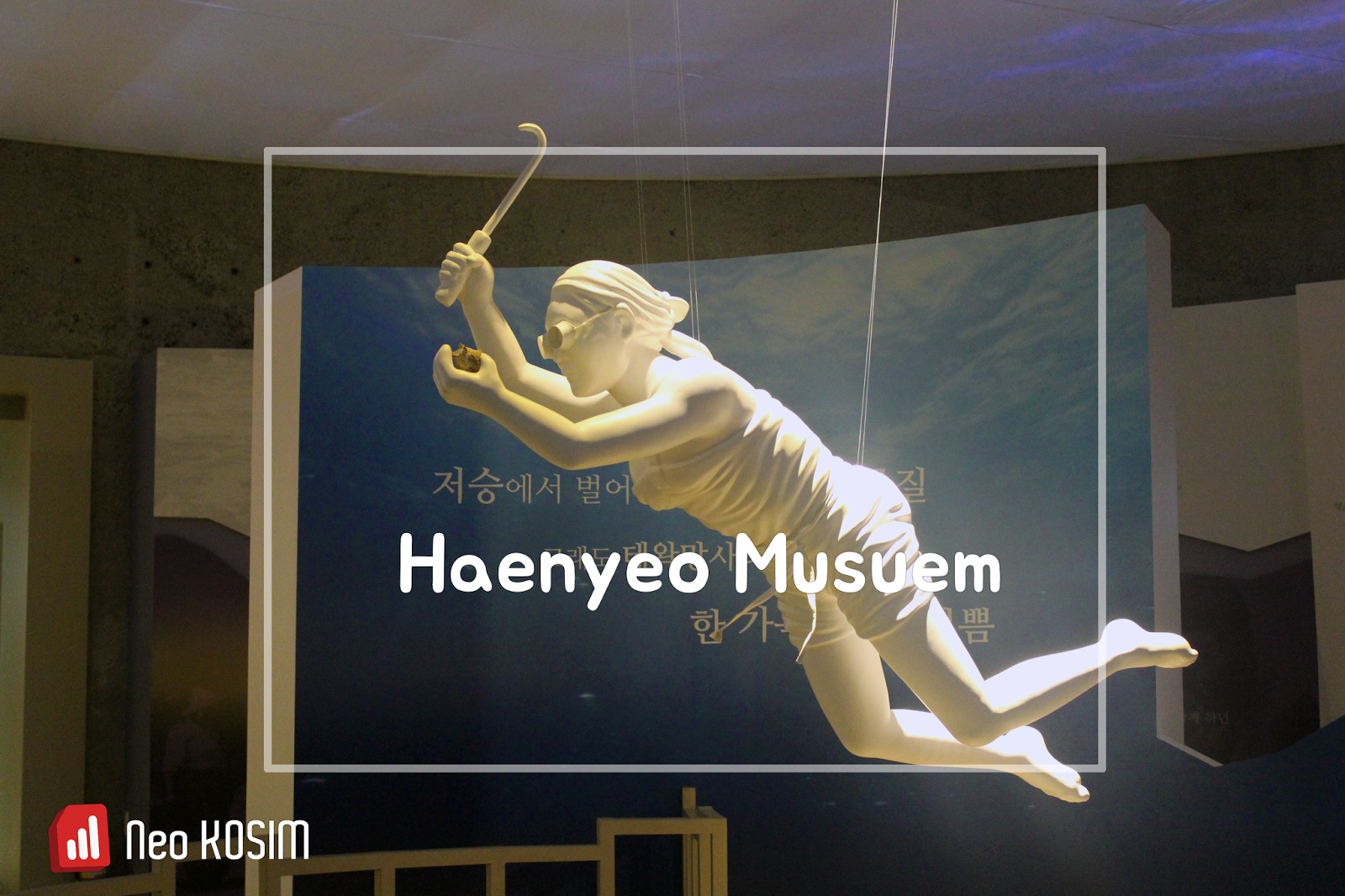
The teenage diving girl is catching abalone.


I didn’t expect big volume of museum for unique female diver.  This museum is located neighboring the small cozy village by the sea. When I grew up, I saw them across the nation wide. But the number of them had decreased little by little because it is very hard job to work under the sea. For this reason, now we are just only able to see them in this island within Korea. The main reason why it remains in this island only is because of the special condition of island and poor environment for life. I surely wanted to visit this small space.

The stone statue of Haenyeo(female diver)
When I entered this museum, symbolic artifact featuring of female divers greeted me. After ticketing, staff guided me to see the video about female divers story on the right side of the information desk. Although it was just only 10 minutes documentary image, it was enough for me to get much more strong impression about them than I expected.

There were female divers through the whole country of Korea till the 1960s. They couldn’t be found out in main land recent time anymore. Jeju Island(제주도) was the most activated area in this country since long time ago. They had to lay specialty to the King and central government during all the former dynasty because this island has been rich in the marine products and it had boasted the best in quality when comparing with other sea fields. In the beginning, men undertook the duty. As time went by, many numbers of men ran away into to the land because they couldn’t tolerate the hard condition in nature and intensity of hard work. From long time ago, this reason resulted in the number of female is more than the number of men, in unique population composition rate in this island. As the results, ladies had managed to take over the economic duty for family as well as preparing of principal products instead of their husband. The social position of them as a significant role to manage in all parts of their society is quite different with other area in this country.
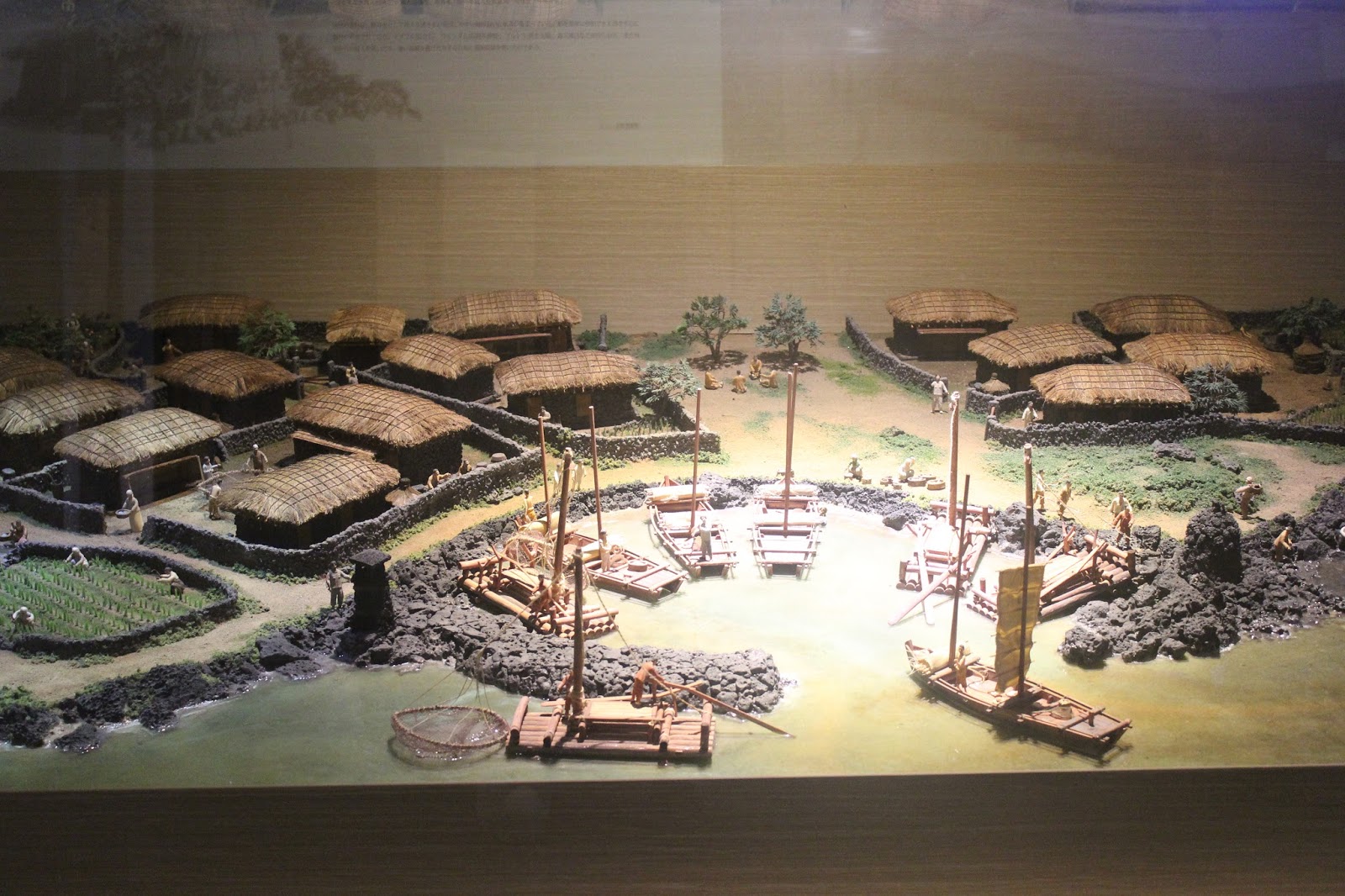
The typical half-sea half-farm village of old Jeju Island

Furthermore, land was so infertile (this island was composed by the several volcanic activities) that they could not cultivate diverse agricultural products and always suffered from food shortage. All that people could do was just to cultivate small amount of grain and agricultural products and to gather the food resources from the sea. Their greatness is just not only in the tenacious hold on life and strong pioneer spirit but also in their wonderful working skills under the sea. They usually started to learn how to swim at the age of seven or eight, skilled up their diving abilities as they grow and became a full-scale woman diver member at the age seventeen to eighteen. They can dive in general fifteen to twenty feet (6 meters) in depth without oxygen tank, sometimes to seventy feet (21 meters) and for over one minute even to three minutes.
The working female diver without any equipment under the sea and she is wearing old type swim suit just for made by cotton cloth 

When they work, they do without using any underwater diving equipment like oxygen tank in unique. It couldn’t be done without invincible spirit of great courage, long experiences and accumulated technology about sea. It was the job beyond job for their life.

The sound (Sumbisori) like whistling to get their breath back when they come out surface of the sea shows that how amazing their unique and excellent diving technique as well as astonishing scientific discovery as the result of gaining through their body are. It is close to the sounds made by whale and able to provide fresh air into their body in short seconds with this way. With the changing years, there has been changed in their tools and clothes but they do still the same skill of old way when they gather the sea products.
 The old house where they lived and the hanging round ball-like tube with fishnet (old type) on the stone wall

The Bulteok area--This is the zone Haenyeo are resting at a fireplace after finishing their work, dried their clothes, shared some food and chattered about the daily life and diving skills
The tools for dive
The Teu boat--primitive style of boat used for catching fish, collecting seaweed and transporting haenyeo when they worked in the far distance from the land
 The seafood taken by them became to be sold expensive because it is regarded as valued nature products. As they earned the money much more than before, they send their daughters to the land to educate well and get more comfort life. So, ironically, it became one of the key reasons of fall-of the number of them sharply. Who can dare blame their opinion? For the reasons of hard working condition, sharp decrease of sea products and it is true that these female divers might be disappeared in couples of decades and be left just as the name of old traditional unique culture in this island. The view overlooking the blue sea from the observation rest area on third floor was enough for me to feel deep impression with wild wind and waves they meet every day. How clean and brilliant sky it was!
The small village neighboring to this museum
Those ladies who was born as the daughter of sea, learnt the swimming and diving before knowing what the sea shall imply to their coming life, faced harsh reality and managed to duties of life in assertive attitude. Sincerely, this museum must be small but deep meaningful place dedicate to their great trace of life. Yet the labor song what embrace their plight life seems like to remain in my ears.
*Update>> They are listed on Intangible Cultural heritage of Humanity by UNESCO on NOV2016. 

Operation; 9 AM to 5 PM except on first and third Monday every month and some special holiday. For more details please refer to their official web site.


The museum in nature, National Museum of Modern and Contemporary Art in Gwacheon (국립현대미술관 과천관)
 

The museum in nature, National Museum of Modern and Contemporary Art in Gwacheon (국립현대미술관 과천관)

Art museum beside the Zoo???
Absolutely, it is unusual combination that doesn't fit at all in general cases. To be interest, the both are situated to each other next to in a short distance from Seoul. The zoo and botanical garden moved to the current location from Seoul, in 1980s, and became unusual neighbor by building the museum on next to. It is operated by the Ministry of Culture, sports & Tourism. 
This museum, despite of some distance from Seoul, in quality has undertaken main role for last over 30 years in many sides of cultural primary duties to collect, preserve, study, exhibit. They offer free admission in case of permanent exhibition among the eight galleries all round year except Monday off. There were some controversial at first during construction because the location shall hinder its accessibility. However, the problem could be solved clearly by the opening of the Seoul subway line 4 one year before the opening of museum in 1985. It is true that this museum boasts international-sized facilities and the important role as cultural platform especially on the modern & contemporary architecture, design and crafts field.The beacon shape of center part and the fortress shape of both side part of this building were originated from the traditional Korean architecture.


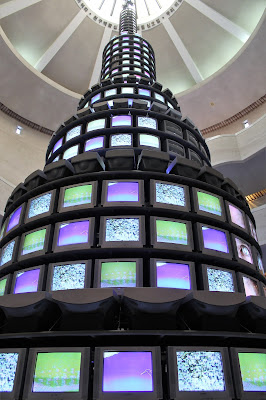
The More, The Better
The prominent artwork must to see in here is the video tower artwork ‘The More, The Better’ which is by Namjune Paik who was world-famous video artist. Of course, you are able to get a chance to appreciate it free of charge. He was Korean American video artist and made it by using the 1003 television instead of canvas. He created this masterpiece to celebrate the coming 1988 Seoul Summer Olympics in 1986. The quantity 1003 means the 03 Oct, the National foundation day of Korea and it reach as high as the three floors. As it stood on 28 years, over 300 televisions didn’t work well. Although there were several times repair, the condition has not improved much since whenever I saw. To be fortunate! They had it total rebirth in celebration of the 70th anniversary of Korea’s liberation (15 Aug 2015) through perfect and clean repair process. There were controversial whether to keep on going to the old original ones or replace them with new electric components inside when it was recovered. After long discussion, It was exactly reproduced the original form and elements. The repairing cost in some cases was higher than to buy a new one as I heard. It took so long time for the public to gain the original magnificent art. The unique spiral-formed ramp core had such a wonderful structure matching with this artwork that I could appreciate this masterpiece in every angle by walking this slope way.
 It is also true that one of the favorite charming points of this art museum might be the huge outdoor sculpture park on the green boasting superb natural landscape. Thanks to diverse artworks, It is just a kind of picnic event for me to visit this museum. Museum in the forest, this is the exact wording for here, maybe. Don't wait.

TIP: Zoo next to, as you can see in the image, is very lovely place to visit also. It is the one of top 10 Zoo in the world. It is recommendable for you to drop by on the same day as one day course.

How to get there :
Take off at the Seoul Grand Park station (Seoul subway line 4, exit)
>>walk backward in three minutes to take the shuttle bus
.  (every 20 minutes run, free ride, Monday off)